There’s a big difference between an hour on quiet roads and a proper day out — let alone a weekend away. If your comeback has gone well so far, touring is the natural next step. It’s also the easiest place to overreach, so it’s worth doing the planning properly.
Build up distance gradually. Don’t jump from a ten-mile ride to a three-hundred-mile day.
Start from where you actually are
If you’ve been following a simple plan for your first rides back, you’ll already have a sense of how far, and for how long, you’re genuinely comfortable. Touring distance should build on that, not skip past it.
A sensible progression looks something like this: a couple of hours one weekend, half a day the next, then a full day, then finally an overnight trip. Each step tells you something the last one couldn’t — how your back feels after three hours, whether your kit keeps you warm enough, whether you actually enjoy the distance or you’re just gritting your teeth through it.
Plan fuel and rest stops in advance
This matters more on an unfamiliar bike, or a bike you haven’t ridden much yet. Know its realistic fuel range before you rely on it — the number on the spec sheet and the number you actually get are rarely quite the same, especially at higher speeds or in poor weather.
Plan to stop more often than you think you’ll need to. A rest stop isn’t just about fuel — it’s a chance to stretch, check your kit, look at the map, and reset your concentration. Fatigue creeps up quietly on a bike, more so than in a car, and it affects your judgement well before it feels obvious.
- Know your bike’s realistic fuel range, not just its official one
- Mark fuel stops on your route before you set off, especially somewhere rural
- Plan a proper break at least every couple of hours
- Build in more time than the satnav says — traffic, weather and stops all add up
Pack for the ride you’re actually doing
You don’t need to carry a full workshop, but a few basics can turn a bad afternoon into a minor inconvenience:
- A basic toolkit suited to your bike
- A puncture repair kit, and know how to use it before you need to
- Your breakdown cover details, saved somewhere you can find them without signal
- A tyre pressure gauge, if you don’t already carry one
- Cable ties and a bit of gaffer tape — genuinely useful for more problems than you’d expect
Breakdown cover is worth checking before you rely on it, not after. Confirm it actually covers motorcycles, and roughly how far it’ll recover you and the bike if things go properly wrong a long way from home. If you haven’t sorted your insurance properly yet, it’s worth doing before you rely on any of this.
Dress for the weather you’ll actually get
Not the forecast for the morning you leave — the whole day, wherever the road takes you. Layering matters more on a longer ride, because you can’t just turn the temperature up or down like you can in a car.
Waterproofs that actually work, not just look the part.
Pack for a worse day than you’re expecting. A spare base layer, a proper waterproof outer layer, and a way to keep your hands and feet dry take up very little space and make a genuinely miserable day merely uncomfortable.
If you’re touring with others
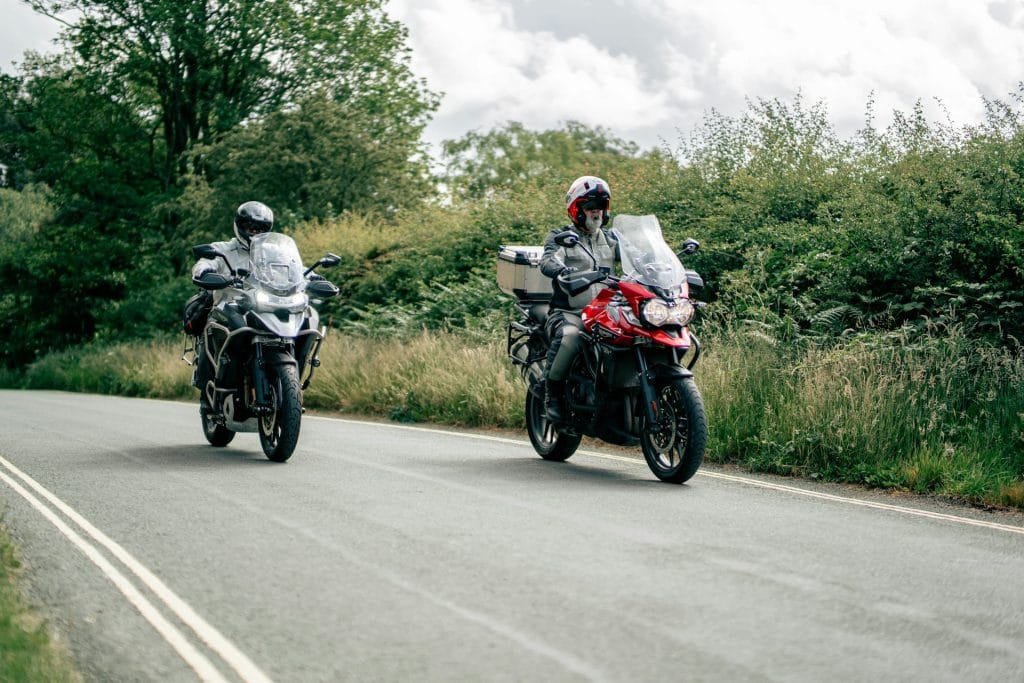
A group ride adds its own layer of planning. Agree the route and the stops before you set off, not somewhere along it, and settle on a simple plan for what happens if someone gets separated — a phone signal isn’t always guaranteed, and neither is everyone remembering the same junction.
Ride at the pace of the least experienced rider in the group, not the most confident. It isn’t a race, and a group that waits for each other at fuel stops has a far better day than one that doesn’t.
The night before, not the morning of
Do your pre-ride checks and pack the bike the evening before a longer trip, not while you’re trying to leave on time. Rushing a check is worse than not doing it properly at all, because it gives you false confidence.
Double-check anything you’ve bolted or strapped on — panniers, a tank bag, a tail pack. Give it all a firm tug before you set off, and again after the first few miles once things have had a chance to settle.
A simple pre-tour checklist
- Build distance gradually — don’t jump straight to a big day
- Know your bike’s realistic fuel range
- Plan fuel and rest stops before you set off
- Pack a basic toolkit, puncture kit and your breakdown cover details
- Dress for the whole day, not just the forecast at breakfast
- Do your checks and pack the night before
- Give any luggage a firm tug before you leave, and again early on
None of this needs to be complicated. A well-planned day out is simply a short ride with a bit more thought put into it — and that thought is what turns a good ride into one you’d happily do again.
Our free 30-point Returning Rider Checklist covers touring preparation alongside everything else worth sorting out before you get back on two wheels.
Start small, plan properly, and the miles will take care of themselves.