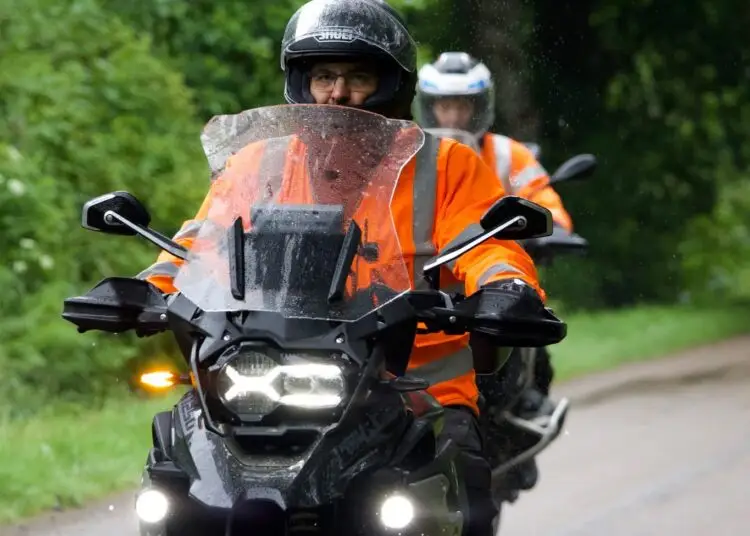
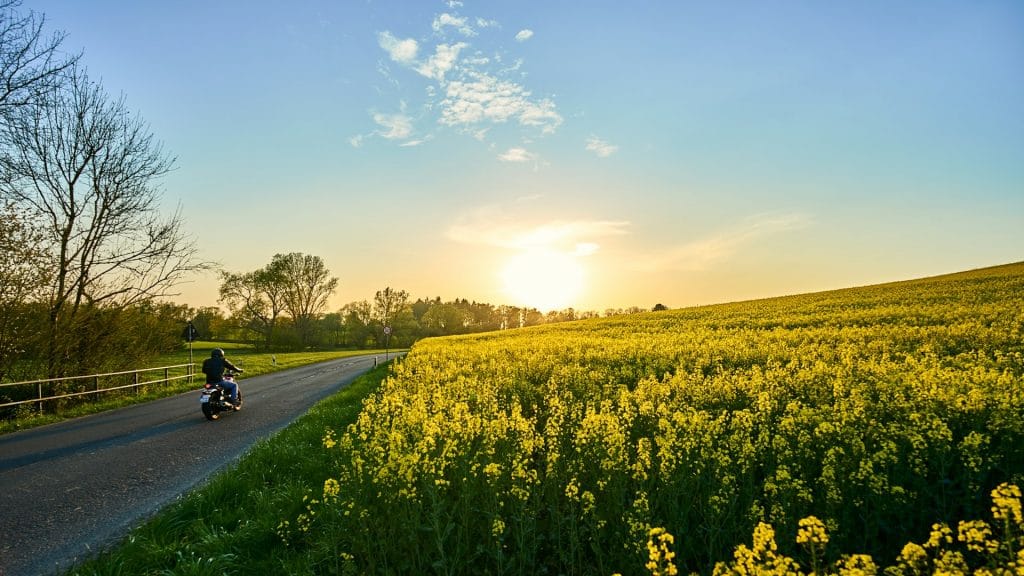
The first ride back, or your first ride back, is the one everyone worries about — and it’s the one you have the most control over. Nobody is timing you, nobody is judging you, and the only thing that matters is that you finish it wanting to do another. Remember, your first ride back should always leave you wanting more.
The trick is doing less than you think you can. Here’s a simple 30-day plan for getting from “I’ve got the bike out” to “I’m riding again”, one manageable step at a time.
The aim of your first ride isn’t distance. It’s coming home wanting more.
As you prepare for your first ride back, keep in mind that each step should be about building confidence. Your first ride back should feel safe and enjoyable.
Before you turn the key
Ten minutes of preparation makes the whole first ride calmer.
- Do a proper pre-ride check: tyres, controls, lights, oil, chain and stands
- Wear all your kit — helmet, gloves, jacket, trousers and boots — even for a short pootle
- Pick a quiet time and a quiet route you already know
- Check the weather, and go only if it’s dry and mild
- Tell someone where you’re going and roughly when you’ll be back
If you haven’t done it yet, book a refresher first — we’ve covered the options here. It’s the single best thing you can do before week one.
Your first ride back can be a transformative experience, so take the time to enjoy it.
Week one: car park, then quiet roads
During your first ride back, confidence will grow with every successful manoeuvre.
Start off the public road. An empty car park is the perfect classroom: practise pulling away smoothly, slow-speed control, tight turns and braking until it all starts to feel familiar again. Twenty minutes is plenty.
Then take a short loop on quiet roads — fifteen to twenty minutes, at a quiet time, nowhere near rush hour. Expect a wobble at the first few junctions. It passes faster than you think.
Keep the first few rides short, and stop as soon as you feel tired or tense. Rustiness and fatigue creep up faster than you’d expect.
Remember, your first ride back is just as much about mental preparation as it is about physical skills.
Week two: add some variety
Evaluate how you feel during your first ride back and adjust your approach accordingly.
Now stretch things slightly. Ride for half an hour to forty-five minutes, using a mix of road types: a bit of village, a bit of open road, a roundabout or two. Focus on your observation — looking well ahead, checking your mirrors, and planning your position before you reach a junction.
Stay solo. This is the week to find your own rhythm, without anyone else setting the pace.
Your first ride back is an opportunity to reconnect with the joy of riding.
Week three: build distance gently
As you build distance, remember that your first ride back should be about enjoying the journey.
Aim for an hour or so, with a proper stop halfway: a café, a lay-by, somewhere to get off, stretch and take stock. Check your tyre pressures — it’s worth making it a weekly habit — and give the bike a quick look-over.
Add a little more complexity now: some bends, a slightly busier road, a route you don’t know quite so well. Smooth beats fast, every time.
Week four: look back, then look ahead
Reflect on your feelings during your first ride back to better understand your progress.
By now you should be noticing that the wobbles have faded and you’re thinking about the ride rather than about riding. Take a moment to review it. What felt easy? What still feels awkward? Was there a moment that made you tense?
Use the answers to decide what comes next: a skills refresher for the awkward bits, a longer day out, or riding with a friendly group. Just don’t jump from a one-hour ride to a three-hundred-mile day — build up gradually. When you’re ready for that longer day, here’s how to prepare for it properly.
Your first ride back should be a positive experience, leading to many more to come.
If a ride doesn’t go to plan
Accept that your first ride back may have its challenges, but these are all part of the process.
It will happen at some point. A stall at a junction, a wobble on a roundabout, a moment that had your heart thumping. None of it means you’ve lost the knack — it means you’re rebuilding it.
When it does, don’t just push on. Pull over somewhere safe, take a few breaths, and think about what caused it. Then either finish with a gentle, easy ride home, or call it a day. Next time, go back a step: the car park, a quieter road, a shorter loop. If something keeps tripping you up, that’s exactly what a lesson with an instructor is for.
Think of it as information rather than failure. Every rider who has come back has had at least one of these rides.
Keep in mind that your first ride back can help lay the foundation for future rides.
Signs it’s time to slow down
Recognise that your first ride back is just as important as any other ride.
- You’re tired, tense or gripping the bars too hard
- You’re missing junctions or arriving at things faster than you’d like
- You’re riding faster than you’re comfortable with just to keep up
- Something feels “off” — with the bike or with you
Any of these is a cue to take a break or end the ride early. Nobody ever regretted going home on a good note.
Ride your own ride. Don’t let old habits, or other riders, push your pace.
During your first ride back, listen to your instincts and ride within your comfort zone.
Your 30 days at a glance
Your first ride back is a crucial milestone, so take pride in your progress.
- Before you start: pre-ride check, full kit, a quiet route, a refresher booked
- Week one: car park practice, then short quiet loops
- Week two: half an hour to forty-five minutes, mixed roads, solo
- Week three: about an hour with a stop, and a little more complexity
- Week four: review, then decide your next step
As you reflect on your journey, remember that your first ride back sets the stage for the future.
The trick is doing less than you think you can. Here’s a simple 30-day plan for getting from “I’ve got the bike out” to “I’m riding again”, one manageable step at a time.
The aim of your first ride isn’t distance. It’s coming home wanting more.
Ultimately, your first ride back is a celebration of your return to riding.
Before you turn the key
As you prepare, keep in mind that your first ride back will always be special.
Ten minutes of preparation makes the whole first ride calmer.
- Do a proper pre-ride check: tyres, controls, lights, oil, chain and stands
- Wear all your kit — helmet, gloves, jacket, trousers and boots — even for a short pootle
- Pick a quiet time and a quiet route you already know
- Check the weather, and go only if it’s dry and mild
- Tell someone where you’re going and roughly when you’ll be back
If you haven’t done it yet, book a refresher first — we’ve covered the options here. It’s the single best thing you can do before week one.
Week one: car park, then quiet roads
After your first ride back, take time to reflect on how far you’ve come.
Start off the public road. An empty car park is the perfect classroom: practise pulling away smoothly, slow-speed control, tight turns and braking until it all starts to feel familiar again. Twenty minutes is plenty.
Then take a short loop on quiet roads — fifteen to twenty minutes, at a quiet time, nowhere near rush hour. Expect a wobble at the first few junctions. It passes faster than you think.
Keep the first few rides short, and stop as soon as you feel tired or tense. Rustiness and fatigue creep up faster than you’d expect.
Your first ride back may feel daunting, but it is an essential step in your journey.
Week two: add some variety
Remember, your first ride back is all about finding your rhythm again.
Now stretch things slightly. Ride for half an hour to forty-five minutes, using a mix of road types: a bit of village, a bit of open road, a roundabout or two. Focus on your observation — looking well ahead, checking your mirrors, and planning your position before you reach a junction.
Stay solo. This is the week to find your own rhythm, without anyone else setting the pace.
Week three: build distance gently
Every successful ride contributes to how you feel about your first ride back.
Aim for an hour or so, with a proper stop halfway: a café, a lay-by, somewhere to get off, stretch and take stock. Check your tyre pressures — it’s worth making it a weekly habit — and give the bike a quick look-over.
Add a little more complexity now: some bends, a slightly busier road, a route you don’t know quite so well. Smooth beats fast, every time.
Always keep in mind that your first ride back is a stepping stone to greater adventures.
Week four: look back, then look ahead
Embrace the lessons learned as part of your first ride back.
By now you should be noticing that the wobbles have faded and you’re thinking about the ride rather than about riding. Take a moment to review it. What felt easy? What still feels awkward? Was there a moment that made you tense?
Use the answers to decide what comes next: a skills refresher for the awkward bits, a longer day out, or riding with a friendly group. Just don’t jump from a one-hour ride to a three-hundred-mile day — build up gradually. When you’re ready for that longer day, here’s how to prepare for it properly.
Every ride counts, but your first ride back is particularly significant.
If a ride doesn’t go to plan
Always cherish the experience of your first ride back, as it shapes future rides.
It will happen at some point. A stall at a junction, a wobble on a roundabout, a moment that had your heart thumping. None of it means you’ve lost the knack — it means you’re rebuilding it.
When it does, don’t just push on. Pull over somewhere safe, take a few breaths, and think about what caused it. Then either finish with a gentle, easy ride home, or call it a day. Next time, go back a step: the car park, a quieter road, a shorter loop. If something keeps tripping you up, that’s exactly what a lesson with an instructor is for.
Think of it as information rather than failure. Every rider who has come back has had at least one of these rides.
Signs it’s time to slow down
- You’re tired, tense or gripping the bars too hard
- You’re missing junctions or arriving at things faster than you’d like
- You’re riding faster than you’re comfortable with just to keep up
- Something feels “off” — with the bike or with you
Any of these is a cue to take a break or end the ride early. Nobody ever regretted going home on a good note.
Ride your own ride. Don’t let old habits, or other riders, push your pace.
Your first ride back is not just a ride; it’s a journey back to joy.
Your 30 days at a glance
Success during your first ride back will motivate you for the next challenge.
- Before you start: pre-ride check, full kit, a quiet route, a refresher booked
- Week one: car park practice, then short quiet loops
- Week two: half an hour to forty-five minutes, mixed roads, solo
- Week three: about an hour with a stop, and a little more complexity
- Week four: review, then decide your next step
Wondering where a first ride back can lead? Here’s my own story of returning after 20 years: 20 Years Off the Bike: Why I Got Back Into Motorcycling.
If you’re feeling anxious about that first ride, read Motorcycling and Mental Health: Why Riding Clears Your Head before you go.